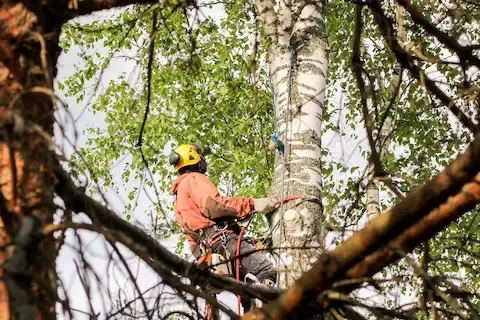
When to Prune Trees in DuPage County Illinois Yards
Getting the timing right on tree pruning can make the difference between healthy, vigorous growth and a tree that struggles with disease or poor structure for years. In DuPage County, Illinois, the combination of cold winters, variable springs, and humid summers creates a specific pruning window that experienced arborists plan around carefully. Whether you have a mature oak in your backyard or a row of ornamental cherry trees along your property line in Carol Stream, understanding when to prune — and when to leave trees alone — protects your investment and the tree's long-term health.
Why Timing Matters More Than Most Homeowners Realize
Pruning is not just about aesthetics. Every cut creates a wound that the tree must seal over, which draws on stored energy and exposes tissue to pathogens and insects. Pruning at the wrong time of year can leave wounds open during periods when harmful fungi and boring insects are most active. In DuPage County, this is especially relevant for species like oak and elm, which are vulnerable to specific diseases that spread rapidly through open pruning wounds during warm months. Timing your pruning work correctly reduces that risk dramatically and allows trees to compartmentalize wounds before stress season arrives.
The General Pruning Window for DuPage County Trees
The safest and most effective general pruning window for most deciduous trees in Carol Stream and the surrounding DuPage County area runs from late January through early April. During this period, trees are fully dormant, insects are inactive, and fungal spores are far less prevalent in the air. The cold temperatures slow pathogen activity, which means pruning wounds face minimal threat while the tree cannot yet respond actively.
Once temperatures consistently rise above freezing and buds begin to swell, you are moving into the transition window. Light structural pruning is still acceptable in early spring before leaves fully emerge, but heavy crown work becomes less ideal. By the time trees are in full leaf — typically late April through early May in this part of Illinois — dormant-season pruning has passed and you are working with fully active trees that are directing significant energy into new leaf tissue.
Species-by-Species Pruning Calendar for Local Yards
Not every tree follows the same schedule. Below is a practical guide for the species most commonly found in Carol Stream and broader DuPage County residential yards.
Oak Trees
Oaks should be pruned exclusively between November and March in Illinois. Oak wilt, a devastating fungal disease spread by sap beetles, is the primary concern. Sap beetles become active as temperatures warm in spring and are attracted to fresh pruning cuts. Any oak pruning between April and October carries meaningful oak wilt risk. If a limb breaks or storm damage occurs outside the dormant window, seal the wound immediately with pruning paint — one of the few situations where wound sealant is actually recommended.
Elm Trees
Like oaks, elms should be pruned during dormancy, ideally December through March. Dutch elm disease, transmitted by the elm bark beetle, is still present in the region. The bark beetle is dormant in winter, making dormant pruning the safest approach. Avoid any elm pruning from April through July when beetle activity peaks.
Flowering Trees — Crabapple, Serviceberry, Hawthorn
These ornamentals are susceptible to fire blight, a bacterial disease that spreads readily through fresh cuts. For DuPage County yards, late winter pruning — late February through mid-March before bud break — is the preferred window. Avoid pruning during bloom or immediately after, as fire blight pressure is highest when trees are flowering. Sterilize pruning tools between cuts when working on any species in the rose family.
Maple Trees
Maples can be pruned during dormancy with good results, but they are known to bleed sap heavily if pruned in late winter as temperatures begin to rise. This sap flow is not harmful to the tree, but it concerns some homeowners. If you prefer to avoid it, wait until leaves have fully emerged in late spring or prune in midsummer. Avoid pruning maples in early spring when sap pressure is at its peak.
Evergreens — Spruce, Pine, Arborvitae
Evergreens in Illinois are generally pruned in late spring after new candles or growth flushes have extended. For pines, pinching new candle growth in late May through early June controls size and density without creating open wounds susceptible to Diplodia tip blight. Arborvitae and spruce can be lightly shaped in late spring as well. Avoid heavy evergreen pruning in late summer or fall, as new growth stimulated late in the season may not harden off before winter.
Summer and Fall Pruning — When It Is and Is Not Acceptable
Late June through August is acceptable for light corrective pruning on most deciduous species that do not carry specific disease concerns. Removing dead wood, crossing branches, or hazardous limbs can be done at this time with reasonable results. The key distinction is that elective structural pruning should wait for dormancy, while hazard removal or deadwood removal can proceed year-round as needed.
Fall pruning — September through November — is generally discouraged for most species. Pruning in fall stimulates some degree of response growth that will not harden before frost, and wound closure slows as the tree moves into dormancy. For Tree Trimming work in Carol Stream, scheduling in late winter gives you the best outcome for almost every species.
Storm Damage — An Exception to Every Rule
DuPage County sees its share of summer storms, and storm-broken limbs cannot wait for the ideal pruning window. Broken or hanging limbs should be removed as soon as safely possible regardless of season. A jagged torn wound left unaddressed is far more damaging than a clean pruning cut made in summer. When emergency work is required, a clean cut back to the nearest healthy branch union is the priority. If you are unsure how to handle storm-related damage on a large tree, see our tree trimming and pruning work for a closer look at how professional crews approach these situations.
Practical Scheduling Advice for Carol Stream Homeowners
The most practical approach for most homeowners in this area is to schedule annual dormant pruning between mid-February and the end of March. This window avoids the deepest cold of January, allows arborists to clearly see branch structure without foliage, and positions wounds to seal ahead of spring growth. Contact a certified arborist in the Carol Stream area before bud break — crews get busy quickly once the season turns, and the best dormant-season slots fill well in advance.
