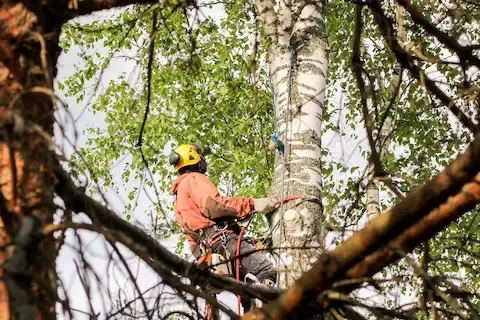
Carol Stream Tree Trimming and Pruning for Homeowners
Proper tree trimming and pruning ranks among the most important investments a Carol Stream homeowner can make in the long-term health and safety of their property. Trees that go untrimmed for years develop structural weaknesses, accumulate deadwood, and push branches into rooflines, utility lines, and neighboring yards. Whether you have mature oaks in a backyard that backs up to the Illinois Prairie Path corridor or younger maples lining a newer subdivision street, a consistent pruning schedule keeps your trees strong, your yard safe, and your property looking its best throughout DuPage County's four distinct seasons.
Why Tree Trimming Is More Than Just Aesthetics
Many homeowners think of trimming as a cosmetic service—something you schedule when branches start looking unruly or when a neighbor comments on overgrowth. The reality is that structural pruning works at a biological level to influence how a tree grows for decades. When a qualified arborist removes competing leaders, crossing branches, or poorly attached limbs, they redirect the tree's energy into a stronger, more balanced framework. That framework determines how well the tree withstands wind loading during the severe thunderstorms that roll through the western DuPage County area each spring and summer.
Beyond structure, pruning manages canopy density. A crown that is too dense traps moisture, restricts airflow, and creates ideal conditions for fungal disease. Crown thinning—selectively removing interior branches to open the canopy—improves light penetration and circulation without reducing the tree's overall height or spread. This single technique can extend the healthy life of a tree by years, particularly for species like silver maple and Siberian elm that are prone to canopy congestion when left unmanaged.
Common Pruning Techniques and When Each Applies
Understanding the vocabulary helps homeowners have more productive conversations with their tree care provider and make better decisions about scope of work.
- Crown Thinning: Removes selective interior branches to improve airflow and light. Best suited for deciduous trees showing dense canopy growth. Typically performed every three to five years.
- Crown Raising: Removes lower limbs to create clearance above structures, driveways, sidewalks, and lawn areas. Commonly needed along Carol Stream residential streets where low-hanging branches interfere with vehicle and pedestrian access.
- Crown Reduction: Reduces the overall height or spread of the canopy by cutting back to lateral branches. Used when a tree has grown too large for its space or when branches are encroaching on structures. Differs from topping—a harmful practice that should never be requested.
- Deadwood Removal: Targets dead, dying, and diseased branches regardless of canopy position. This is the most universally recommended service because deadwood poses immediate falling risks and harbors insects and pathogens that can spread to healthy tissue.
- Structural Pruning: Applied primarily to young trees to establish a dominant central leader and well-spaced scaffold branches. Investing in structural pruning during the first ten years of a tree's life dramatically reduces the corrective work and hazard risk that accumulates in mature trees.
- Clearance Trimming: Addresses branch conflicts with structures, fences, gutters, rooflines, and utility lines. In Carol Stream, overhead utility lines run through many older residential areas, making clearance trimming both a safety and liability concern for homeowners.
For questions about scope or to schedule an assessment, Tree Trimming services are available for residential and commercial properties throughout Carol Stream.
Species-Specific Considerations for DuPage County Trees
Not every tree responds the same way to pruning, and timing matters considerably depending on the species in your yard. Illinois homeowners deal with a wide variety of tree species, each with different growth habits, disease vulnerabilities, and optimal pruning windows.
Oak trees in Carol Stream and the surrounding DuPage County area require special attention to pruning timing due to the risk of oak wilt, a systemic fungal disease spread by sap beetles attracted to fresh pruning wounds. The Illinois Department of Natural Resources recommends pruning oaks outside the April through June window whenever possible. If pruning during that period is unavoidable—for safety reasons, for instance—fresh cuts should be painted with wound sealant immediately.
Crabapple and ornamental trees are common throughout Carol Stream's neighborhoods and are best pruned in late winter while still dormant. This timing encourages vigorous spring growth and allows arborists to clearly assess branch structure before foliage obscures the view. Apple scab, fire blight, and cedar-apple rust are endemic to the region, and good pruning practices that open the canopy directly support disease management.
Elms carry Dutch elm disease risk, and any pruning of stressed or declining elms should be approached carefully. Avoid pruning elms from April through August when elm bark beetles are most active.
Evergreens like spruce and pine are best trimmed in late spring when new growth—called candles—is still soft and partially extended. Pruning at this stage manages size while preserving the natural shape. Avoid heavy pruning of pine into old wood, as these species do not regenerate foliage from bare branches.
Recognizing When a Tree Needs Pruning
You do not always have to wait for a scheduled service visit to recognize that a tree needs attention. Several visible indicators suggest pruning should move up on your priority list.
- Branches crossing and rubbing against each other, creating wounds that invite disease and structural weakness
- One or more dead branches visible from the ground, particularly large-diameter limbs over ten feet in length
- Branches making contact with your roofline, gutters, siding, or fences
- A noticeably lopsided canopy suggesting storm damage or uneven growth toward a light source
- Suckers and water sprouts—vigorous, upright shoots growing from the base or from scaffold branches—that divert energy without contributing to structure
- Canopy so dense that sunlight cannot reach the lawn below, indicating the tree would benefit from thinning
If a branch or section of a tree appears to have died suddenly rather than gradually declining, that warrants professional evaluation rather than a simple pruning call. Sudden dieback can indicate systemic disease, root damage, or pest infestation that requires diagnosis before any cutting begins.
Pruning Mistakes That Damage Trees
Not all trimming improves a tree. Several common practices, sometimes offered by under-qualified contractors, actually cause long-term harm.
Topping is the single most damaging practice inflicted on trees. It involves cutting back main branches to stubs, leaving large wounds that cannot compartmentalize properly and inviting decay, insect colonization, and structurally weak regrowth. Despite being widely condemned by arborists and the International Society of Arboriculture, topping is still performed by unqualified crews who offer it as a solution to trees that have grown too tall. If a company offers to top your trees, that is a direct signal to find a different provider.
Flush cuts—removing branches so close to the trunk that the branch collar is destroyed—eliminate the tree's natural defense zone and leave wounds that heal poorly if at all. Proper cuts are made just outside the branch collar at a slight angle.
Over-lifting removes too many lower limbs at once, stripping the bottom third or more of the canopy. This practice, sometimes called lion-tailing, weakens the branch structure by concentrating weight at branch tips and reducing the tree's ability to photosynthesize efficiently.
Pruning more than 25 percent of the canopy in a single season stresses the tree significantly. Aggressive pruning over multiple seasons is far preferable to removing too much at once. Reputable arborists follow this threshold as a standard practice.
Permit and Regulation Considerations in Carol Stream
Carol Stream has established regulations that affect certain tree trimming and removal activities, particularly for parkway trees—the trees located in the public right-of-way between the sidewalk and the street. These trees are technically village property, and any work on them requires coordination with the Village of Carol Stream Public Works Department. Homeowners who trim parkway trees without authorization can be held liable for the cost of replacement if the tree is damaged.
For work on trees on your private property, permit requirements typically apply to removal rather than trimming, but it is worth confirming current requirements before beginning any significant project. Understanding the permit application process for Carol Stream can help you avoid complications and ensure your project moves forward without regulatory delays.
Seasonal Scheduling for Carol Stream Homeowners
Illinois's climate creates a clear rhythm for tree care work. Late winter—February through early March—is the most popular window for dormant pruning of most deciduous species. Trees are fully dormant, structure is visible without foliage, and pruning wounds can seal before insects and pathogens become active in spring.
Summer pruning, generally July through August after the initial growth flush has hardened off, works well for corrective work, deadwood removal, and clearance trimming. Avoid heavy pruning of stressed trees during hot and dry periods, as they have fewer resources to respond to wounds.
Fall is generally the least recommended time for heavy pruning in DuPage County. As temperatures drop and trees prepare for dormancy, wound closure slows significantly, leaving cuts exposed through winter. Light deadwood removal and hazard work are acceptable, but structural pruning is better deferred to late winter.
Choosing a Qualified Tree Care Provider
Carol Stream homeowners benefit from working with tree care professionals who hold ISA Certified Arborist credentials and carry adequate liability insurance and workers' compensation coverage. Pruning large trees requires working at elevation with sharp tools, and the risk of property damage or personal injury is real without proper training and equipment.
Ask prospective providers whether they follow ANSI A300 pruning standards, which represent the industry consensus on proper technique. Request documentation of credentials and proof of insurance before any work begins. A written scope of work that specifies which trees will be pruned, what techniques will be used, and what the cleanup process entails protects both parties and ensures the results match your expectations.
Regular trimming and pruning, performed correctly and on a consistent schedule, is one of the most cost-effective ways to protect your property investment, reduce storm-related hazard risk, and maintain the visual character of your Carol Stream home for years to come.
