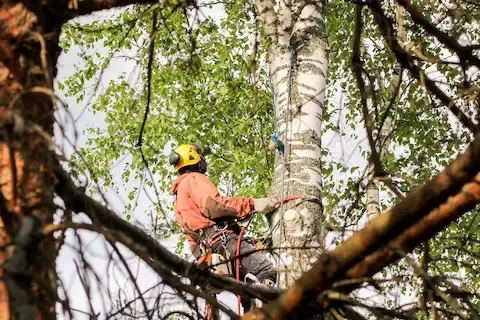
Silver Maple Pruning for Carol Stream IL Homeowners
Silver maples grow fast, spread wide, and line dozens of streets and backyards across Carol Stream. That growth rate is part of their appeal, but it also creates a set of structural problems that most homeowners only discover after a branch comes down in a storm. If you own a silver maple, understanding how and when to prune it is one of the most practical things you can do to protect your property.
Why Silver Maples Require a Different Approach
Silver maples are not like oaks or elms. Their wood is comparatively brittle, and they frequently develop co-dominant stems — two or more main trunks growing at roughly equal size from the same origin point. That fork creates what arborists call an included bark union, where bark becomes trapped between the stems rather than forming a clean connection. Over time, that union gets weaker, not stronger, and what looks like a healthy full canopy can hide a split waiting to happen.
In DuPage County, where summer storms can push sustained winds above 50 mph and ice loading in late winter adds serious weight to branches, a silver maple with uncorrected structure is a liability. Proper pruning does not just improve the tree's appearance — it reduces the mechanical stress points that lead to catastrophic branch failure.
The Right Time to Prune in Carol Stream
Timing matters more with silver maples than with many other species. Late winter — roughly February through mid-March in the Carol Stream area — is the preferred window. The tree is fully dormant, which means cuts heal quickly once growth resumes in spring. Pruning during dormancy also avoids two specific risks: the Verticillium wilt fungus, which can enter fresh wounds during warm-season pruning, and the elevated sap flow that silver maples are known for in early spring.
If a branch is hazardous, you should not wait for the ideal calendar window. A dead limb over a driveway or a cracked co-dominant stem near a roofline is a safety issue first. For routine structural work, though, dormant-season cuts give the tree the best start. You can read more about timing by checking out the dormant pruning calendar for guidance on other species as well.
Structural Pruning Versus Canopy Thinning
There are two fundamentally different goals in silver maple pruning, and confusing them leads to poor outcomes.
Structural pruning focuses on the tree's architecture. On a young silver maple, this means selecting a single dominant leader and suppressing competing stems early. On a mature tree, it means reducing the weight of long lateral branches, removing codominant stems where possible, and eliminating watersprouts — those fast-growing vertical shoots that silver maples produce in large numbers along major limbs. Structural work is long-term investment; it changes the way the tree grows.
Canopy thinning improves airflow and light penetration. It means removing crossing branches, deadwood, and some interior growth without changing the tree's fundamental shape. Thinning is lower-stakes work that a properly trained crew can complete more quickly, but it does not address the underlying structural risks that make silver maples problematic in the first place.
If your silver maple has not had any professional attention in several years, structural pruning should come first.
Cuts to Avoid — Topping and Flush Cuts
Two pruning practices appear frequently on silver maples and cause lasting damage to both.
Topping — cutting the main trunk or major branches back to stubs — is sometimes used to reduce a tree's height quickly. On silver maples, the response is aggressive watersprout production. The tree pushes out dozens of fast-growing vertical stems from every stub, which look full and green within a season or two but are weakly attached and highly prone to future failure. A topped silver maple often looks worse within five years than it did before the work was done, and the structural problems are compounded, not solved.
Flush cuts, where a branch is removed so close to the trunk that the branch collar is destroyed, eliminate the tree's natural wound response. The collar is the slightly swollen tissue where a branch meets the trunk. Leaving it intact allows the tree to compartmentalize the wound and seal the cut site. Removing it creates a large, slow-healing wound that becomes an entry point for decay fungi — a particular problem in older silver maples across DuPage County neighborhoods.
What to Expect from a Professional Pruning Visit
A qualified arborist approaching a silver maple will start with an assessment before any cuts are made. They will look at the overall canopy structure, identify any co-dominant stems, note the presence of cracks, cavities, or deadwood, and evaluate the tree's proximity to structures and utility lines. In Carol Stream, overhead utility lines are common in older residential sections, and working near them requires proper equipment and, in some cases, coordination with utility providers.
The actual pruning work on a mature silver maple typically requires climbing or bucket-truck access. Hand pruners and basic pole saws are not adequate for structural work on a large canopy. The crew should be able to explain each cut before they make it, and they should be removing material to a lateral branch or the branch collar — not leaving stubs.
For ongoing Tree Trimming service, a consistent schedule of every three to five years tends to keep silver maples manageable without over-stressing the tree through excessive removal in a single visit.
Local Conditions That Affect Your Silver Maple
Carol Stream's clay-heavy soils affect how silver maples root. Compacted clay limits oxygen availability and drainage, which puts stress on the root zone even when the canopy looks healthy. Trees under root stress are more prone to branch dieback and have less energy for wound compartmentalization after pruning. If your property has heavy clay, aerating the soil in the critical root zone before or after a major pruning session can improve recovery.
The DuPage County area also experiences periodic late-spring frost events that can damage fresh growth after an early warm spell. Silver maples break bud earlier than most hardwoods, which makes them susceptible to this kind of setback. Pruning in late winter rather than early fall avoids stimulating growth before the frost risk has passed.
A Long-Term View on Silver Maple Care
Silver maples in Carol Stream can live for decades when managed well. The species gets a poor reputation largely because of how it behaves when ignored — rapid growth, weak structure, and brittle wood combine badly in a storm. But with consistent structural attention started early and maintained on a reasonable schedule, a silver maple can provide shade, habitat, and visual presence without becoming a recurring hazard. The investment in proper pruning pays off most clearly the morning after a significant storm, when neighboring trees have dropped limbs and yours has not.
