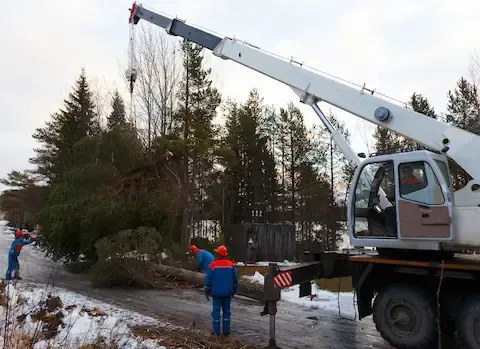
Large Tree Crane Removal Process in Carol Stream IL
Large tree crane removal in Carol Stream follows a predictable sequence: site assessment, crane setup, rigging and cutting, controlled lifts, and debris cleanup. Each phase is coordinated so that a heavy tree comes down in sections without damaging structures, utilities, or the surrounding yard. DuPage County properties — many with mature oaks, elms, and cottonwoods growing close to homes — require this level of precision. If you have a large tree that can't be felled safely with conventional methods, understanding each step helps you prepare your property and set realistic expectations for the crew's arrival.
Step 1: Pre-Removal Site Assessment
Before any equipment moves onto your Carol Stream property, an arborist walks the site to identify hazards. This includes checking for overhead utility lines, measuring ground clearance for the crane boom, and mapping any underground obstacles near the staging area. The crew notes the tree's lean, trunk diameter, and canopy weight distribution. This information determines crane size, rigging configuration, and the cutting sequence used to bring the tree down in safe, liftable sections. In DuPage County, utility proximity is a common constraint that changes the entire removal plan.
Step 2: Crane Positioning and Ground Protection
The crane arrives early on removal day and must be positioned on stable, level ground close enough to the tree but far enough to allow full boom extension. On residential Carol Stream streets, crews often use crane mats — heavy timber pads — to distribute weight across driveways and parkways without cracking pavement or compressing soil over buried utilities. The outriggers are extended and leveled before any lift begins. Improper crane setup is the most common cause of equipment accidents, so this phase is never rushed regardless of schedule pressure.
Step 3: Rigging the Tree for Controlled Lifts
A climber ascends the tree and attaches rigging lines to the sections that will be cut and lifted. The rigging connects to the crane's load line using rated slings and hardware sized for the estimated weight of each section. Large cottonwoods and silver maples common in Carol Stream neighborhoods can produce individual sections weighing several thousand pounds. The climber and crane operator communicate constantly using hand signals or radio. Nothing is cut until the load line is tensioned and the rigging geometry is confirmed. This is the step that separates Tree Removal professionals from general landscapers — rigging errors cause property damage and injury.
Step 4: Sectional Cutting from the Top Down
The climber begins cutting from the uppermost sections and works downward. Each cut releases a section that the crane holds suspended before lowering it to the designated drop zone in the yard or directly into a waiting chipper or truck. Working top-down keeps the trunk stable as weight is progressively removed. For trees near Carol Stream homes along Gary Avenue or Lies Road corridors, where lots are narrow and structures are close together, the cutting sequence is designed so no section swings toward a roofline or fence. The crane operator controls descent speed and landing placement with precision.
Step 5: Stump-Level Trunk Removal
Once all upper sections are down, the remaining trunk stub is addressed. Depending on accessibility, the crane may lift the final butt section clear of the yard, or ground crew members use conventional cuts to drop it in place. The stump is then cut flush to grade or left at a height suitable for grinding, depending on what you've arranged. DuPage County municipalities including Carol Stream may have disposal or permit requirements for large woody debris, so your contractor should confirm compliance before debris leaves the site.
Step 6: Site Cleanup and Final Walkthrough
After the last section is removed, ground crew members chip brush, split or haul logs, and rake the work area. Crane mats are removed and the driveway or lawn is inspected for damage caused by equipment weight. A final walkthrough with you or a property representative confirms that nothing is left behind and that the scope matches what was quoted. If you want to understand when a crane removal makes sense versus a standard felling, that context helps you evaluate whether the process described here was the right call for your tree. Most Carol Stream properties benefit from crane removal on any tree above 40 feet standing near a structure.
What Makes DuPage County Crane Jobs Different?
Carol Stream sits in a corridor of mature suburban tree canopy where lot sizes are moderate and homes are close together. Unlike rural sites where trees can be felled and dragged, most urban removal work here requires the lift-and-lower method throughout. Local soil conditions after wet springs can also compromise crane pad stability, which means experienced crews bring additional matting. If your property has mature trees planted in the 1970s and 1980s — common throughout Carol Stream's established subdivisions — the trees are now large enough that crane work is often the only responsible option.
