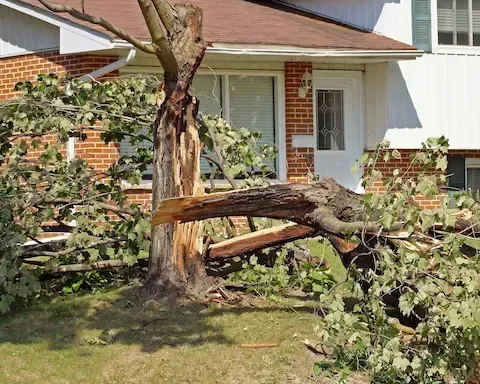
Hazardous Tree Warning Signs Carol Stream Homeowners
Physical Tree Structure Warning Signs
Your property's trees can develop serious structural problems that threaten both safety and property damage. Understanding these warning signs helps you identify hazardous conditions before they become dangerous.
Lean patterns indicate compromised root systems or structural failure. A sudden lean, especially after storms, signals immediate danger. Gradual leans exceeding 15 degrees from vertical also warrant professional evaluation. Check for exposed roots on the leaning side, soil mounding, or cracked pavement around the base.
Cracks in the trunk represent serious structural weakness. Vertical cracks often indicate internal decay or lightning damage. Horizontal cracks suggest the tree is splitting under its own weight. Look for separating bark, gaps that you can insert fingers into, or bleeding sap around crack areas.
Codominant stems create weak branch unions prone to failure. These occur when two main stems grow parallel without a strong connecting joint. The bark between stems often becomes included, creating a weak point. During Carol Stream's severe weather seasons, these unions frequently split, causing major property damage.
Root problems manifest above ground through various symptoms. Mushroom growth around the base indicates root rot or internal decay. Soil erosion exposing major roots reduces tree stability. Construction damage from nearby projects can sever critical root systems, even if damage isn't immediately visible.
Crown and Foliage Indicators
Dead crown sections signal declining tree health and potential hazards. Start by examining the uppermost branches for leaf absence, brittle twigs, or completely bare sections during growing season. Dead wood becomes increasingly brittle and prone to falling without warning.
Dieback patterns reveal progressive tree decline. This typically starts at branch tips and works inward toward the trunk. In DuPage County's climate, normal seasonal dormancy differs from pathological dieback. Dead sections remain leafless during spring emergence while healthy portions develop normally.
Canker diseases create sunken, discolored areas on branches and trunk. These lesions weaken structural integrity and can girdle branches, cutting off nutrient flow. Advanced cankers often crack and ooze, providing entry points for additional pathogens and insects.
Pest infestations accelerate tree decline and structural failure. Emerald ash borer has devastated ash trees throughout Illinois, creating widespread hazardous conditions. Look for D-shaped exit holes, serpentine galleries under loose bark, and increased woodpecker activity indicating beetle presence. If you find those signs on an ash you want to keep, the next question is whether treatment is worth it - here is what EAB treatment costs in Carol Stream.
When dealing with severely compromised trees that pose immediate danger to your property, professional Emergency Tree Removal services provide rapid response and safe removal techniques that protect surrounding structures and landscaping.
Environmental Damage Assessment
Storm damage creates immediate and long-term hazardous conditions. High winds can crack major branches, split trunks, or uproot entire trees partially. Even trees that appear stable after storms may have suffered hidden damage to root systems or internal structure.
Lightning strikes cause both obvious and subtle damage. Direct strikes often split trunks dramatically, but nearby strikes can damage root systems or create internal heating that kills cambium tissue. Look for spiral bark patterns, sudden branch death, or unusual browning following thunderstorms.
Construction damage weakens trees gradually over several years. Grade changes alter water drainage patterns around roots. Soil compaction from heavy equipment reduces oxygen availability to root systems. Trenching for utilities can sever major roots, destabilizing even large mature trees.
Soil conditions affect tree stability significantly. Poor drainage creates anaerobic conditions that kill roots and promote decay fungi. Conversely, severe drought stress weakens trees' natural defense systems against pests and diseases. Recent weather extremes in Carol Stream have stressed many established trees beyond their tolerance limits.
Seasonal Risk Factors
Winter conditions create unique hazardous tree situations. Ice storms add tremendous weight to branches, often exceeding their structural capacity. Snow loading combined with high winds during blizzards frequently causes failures in compromised trees. Cold weather makes wood more brittle and prone to sudden breakage.
Spring emergence reveals winter damage and ongoing health issues. Trees failing to leaf out normally may have suffered root damage or trunk injuries. Delayed bud break compared to similar species indicates stress conditions that compromise structural integrity.
Summer stress periods weaken tree defenses and accelerate decline. Extended drought, heat stress, and increased pest activity combine to create hazardous conditions. Trees with existing structural problems often fail during summer storms when they're carrying full leaf loads.
Fall preparations should include thorough hazard assessments before winter weather arrives. Dead branches become more visible as leaves drop, revealing structural problems hidden during growing season. After major storm events, property owners often need guidance on DuPage storm debris pickup rules for safe and compliant cleanup procedures.
Professional Assessment Indicators
Certain warning signs always require professional evaluation regardless of your experience level. Multiple symptoms occurring simultaneously indicate complex problems requiring expert diagnosis. Trees showing rapid decline over single growing seasons often have serious underlying issues.
Large mature trees near structures, power lines, or high-traffic areas warrant professional assessment even for minor symptoms. The potential consequences of failure make professional evaluation a wise investment compared to potential property damage or injury costs.
Documentation helps track changes over time and provides valuable information for tree care professionals. Photograph suspicious areas from multiple angles, noting dates and weather conditions. Keep records of any recent construction, chemical applications, or environmental changes near affected trees.
Timing affects both assessment accuracy and treatment options. Many tree problems are easier to diagnose during specific seasons when symptoms are most apparent. Professional arborists can provide seasonal monitoring schedules for trees with existing risk factors.
Immediate Safety Responses
When you identify serious hazardous tree warning signs, immediate action protects both people and property. Restrict access to areas beneath questionable trees, especially during windy conditions. Remove vehicles, outdoor furniture, and other valuable items from potential falling zones.
Emergency situations require immediate professional intervention. Trees leaning toward structures, hanging branches over walkways, or showing fresh cracks after storms pose imminent dangers. Don't attempt DIY removal of hazardous trees, as improper techniques often worsen dangerous conditions.
Communication with neighbors helps address shared risks from boundary trees or overhanging branches. Document conditions with photographs and maintain written records of conversations regarding shared tree responsibilities.
Municipal notification may be required for trees affecting public areas, utilities, or right-of-ways. Carol Stream has specific procedures for reporting hazardous trees near public infrastructure, ensuring coordinated responses that protect community safety. When the warning signs turn into an actual failure during a storm, that becomes emergency tree removal after a storm - crews are on call around the clock for exactly that.
