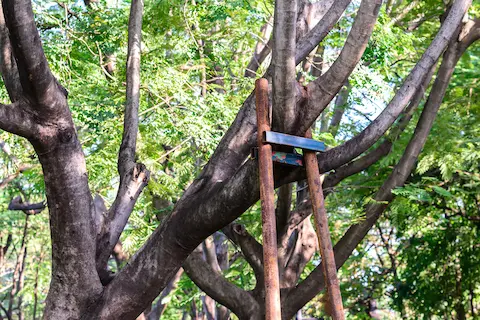
When to Cable a Mature Tree in DuPage County Illinois
Mature trees are some of the most valuable features on any DuPage County property. A large white oak along a fence line or a decades-old silver maple shading a backyard in Carol Stream can represent generations of growth — and real structural risk if that growth has gone unchecked. When a tree develops certain structural weaknesses, cabling becomes one of the most effective tools an arborist can use to extend its safe life without removing it. Knowing when to act, and what signs to look for, helps you protect both the tree and everything around it.
What Tree Cabling Actually Does
Tree cabling is not a cosmetic fix. It's a structural intervention. A certified arborist installs high-strength steel cables or flexible synthetic systems between major limbs or leaders to redistribute load and limit the range of movement during high wind events or heavy ice loading. The goal is to reduce the mechanical stress at points where the tree's own architecture creates vulnerability. Cabling does not cure a tree's structural problem — it manages it. That distinction matters when deciding whether cabling is appropriate or whether removal is the more responsible path.
Structural Conditions That Indicate Cabling Is Needed
Not every large tree needs cabling, and not every cabled tree actually needed it. The decision comes down to specific structural indicators identified during a professional assessment. In DuPage County, where mature elms, oaks, maples, and cottonwoods dominate residential landscapes, these conditions appear regularly:
- Codominant stems: When two or more stems of roughly equal diameter grow upward from a common attachment point, each competes for structural dominance. This growth pattern creates a mechanically weak union that is prone to splitting, especially as the stems continue to increase in diameter and weight.
- Included bark: When bark becomes embedded between two stems at their union, it prevents the formation of strong wood tissue. The junction looks pinched or compressed from the outside. Included bark is one of the most reliable predictors of stem failure in mature trees.
- Previous storm damage: A tree that has already cracked, split, or lost a major limb during a thunderstorm or ice event may have compromised its internal integrity. Cabling can stabilize what remains if the tree is otherwise healthy.
- Significant lean with root exposure: A tree developing a pronounced lean, particularly one accompanied by soil upheaval or root plate lifting on the opposite side, is signaling that its anchor is weakening. Cabling combined with ground monitoring may be appropriate in some cases.
- Large horizontal limbs over structures: Extended horizontal growth over a home, garage, or driveway in Carol Stream or Wheaton creates a long lever arm. Heavy snow or wind loading can cause failure even on a limb with no visible decay.
When Cabling Is Not the Right Answer
There are situations where cabling will not solve the problem and may create a false sense of security. If a tree shows significant internal decay at the union being cabled, the hardware has little sound wood to anchor into. A cable system is only as strong as the wood it attaches to. Similarly, if a tree is in serious decline — showing extensive dieback, significant bark loss, or systemic disease — cabling prolongs risk rather than managing it. An honest arborist will tell you when removal is the better recommendation for your property and your neighbors' safety.
DuPage County's varied soil conditions also play a role. Clay-heavy soils common across the county retain moisture and can affect root stability in ways that reduce a tree's overall structural capacity even when the canopy looks healthy. A ground-level assessment matters as much as the canopy inspection. You can also review our cabling and bracing work to understand how these assessments translate into real installations on local trees.
Timing Considerations for Cabling Installation
Cabling can generally be installed any time during the year, but there are practical windows that work better for both the arborist and the tree. Late winter and early spring — before leaf-out — give the arborist a clear view of the tree's branching structure without foliage interference. This makes it easier to identify the precise attachment points that will provide the most effective load distribution. Fall is also a reasonable window after leaf drop.
Avoid scheduling cabling immediately after a major storm without first having the tree inspected. A storm event can create new damage that changes the structural picture significantly. What looked like a manageable codominant stem before the storm may now have an active crack running through the union. The assessment needs to reflect current conditions, not a prior inspection.
What the Cabling Assessment Involves
A proper cabling assessment in Carol Stream or the broader DuPage County area involves more than looking up at the tree from the ground. A qualified arborist should evaluate the branch attachment angles, probe the union areas for decay, assess the overall health and vigor of the tree, and consider the target zone — meaning what is at risk if the tree or a limb fails. A tree overhanging a seldom-used garden path is a different risk profile from one hanging over a family's primary outdoor living space.
The arborist should also explain the system being recommended. High-strength steel cables installed through the canopy require periodic inspection because hardware can become embedded in the wood as the tree grows. Flexible synthetic systems have different inspection requirements. Either way, cabling is not a one-time installation — it requires follow-up, typically every two to three years, to ensure the system is still functioning and positioned correctly.
Protecting Your Property and Your Tree's Future
Mature trees in DuPage County add measurable value to residential properties and contribute to neighborhood character that takes decades to develop. When cabling is the appropriate intervention, it can extend a tree's safe, functional life by many years. The key is having the assessment done by someone with the credentials and experience to distinguish between a tree that genuinely needs cable support and one that has progressed beyond what cabling can safely address.
If you have a large tree with a forked canopy, visible bark inclusion, or a history of storm damage, a professional structural evaluation is the right first step. Tree Bracing from a certified Carol Stream arborist gives you a documented assessment and a clear recommendation based on what the tree actually needs — not a one-size-fits-all approach.
