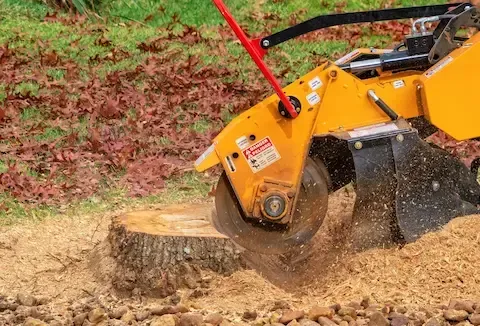
Average Stump Removal Cost in DuPage County Illinois
What Stump Removal Costs in DuPage County
If you have a leftover stump sitting in your yard after a tree removal, the next question is usually a simple one: what is it going to cost to get rid of it? In DuPage County, stump grinding prices generally fall between $3 and $5 per inch of diameter, measured at the base of the stump. That range holds for most standard residential jobs across Carol Stream, Wheaton, Lombard, and the surrounding communities. However, the final number on your quote depends on several factors beyond just stump size, and understanding those variables helps you plan accurately before you call for an estimate.
How Stump Diameter Drives the Base Price
The diameter-based pricing model is the standard across most of the Chicago suburbs, and DuPage County is no exception. A stump that measures 12 inches across at ground level will typically cost between $36 and $60 to grind. A large oak or silver maple stump measuring 30 inches could run $90 to $150 or more before any additional fees apply.
Most contractors in the Carol Stream area also apply a minimum service charge, commonly ranging from $75 to $150, regardless of how small the stump is. This covers mobilization, setup, and the basic cost of sending a crew and equipment to your property. If you only have one small stump, you will likely pay the minimum rather than the per-inch rate. Bundling multiple stumps into a single appointment is one of the most effective ways to reduce your per-stump cost.
Tree Species and Wood Density
Not all stumps grind equally. The species of the original tree directly affects how long the grinding takes and, in turn, what you pay. Hardwood trees that are common throughout DuPage County present a different challenge than softwoods:
- Oak — Dense and fibrous, oak stumps take longer to grind and often push costs toward the higher end of the per-inch range.
- Silver maple — Softer than oak but still a sizable tree in many Carol Stream yards; pricing is typically mid-range.
- Ash — Given the widespread impact of the emerald ash borer across Illinois, ash stumps are common. The wood is dense, and older stumps may have decay that complicates grinding depth.
- Evergreens such as spruce or pine — These are generally softer and faster to grind, which can keep costs at the lower end.
When you request a quote, mention the tree species if you know it. A contractor who accounts for wood density upfront is more likely to give you an accurate estimate.
Site Access and Equipment Constraints
Stump grinders come in different sizes, and the machine that fits through a standard gate opening is not the same machine that handles a large stump efficiently. If the stump is in a backyard with a narrow gate, a fence line, or limited clearance, the contractor may need to use a smaller walk-behind grinder, which adds labor time and may increase the total price.
Properties in older Carol Stream neighborhoods sometimes have mature landscaping, raised garden beds, or utility boxes near the stump that require careful maneuvering. Slopes and soft ground conditions, which are not uncommon after a wet Illinois spring, can also affect how quickly equipment can be positioned and stabilized. Access challenges are legitimate cost factors, and any reputable contractor will note them during an on-site estimate rather than applying a surprise charge afterward.
Grinding Depth and Root Flare Removal
Standard stump grinding cuts down to roughly 6 to 12 inches below grade, which is sufficient for lawn restoration or planting grass seed over the area. If you plan to plant a new tree, install a patio, or lay sod in that location, you may want deeper grinding or removal of the lateral root flare.
Deeper grinding adds time and wear on equipment, so expect an upcharge. Full root removal — physically digging out the root system rather than just grinding the stump — is a separate and considerably more expensive service that most homeowners do not require. For typical lawn use in a DuPage County residential yard, standard depth grinding at the base rate is usually sufficient.
Debris Hauling and Cleanup Expectations
After grinding, the machine produces a pile of wood chips and mulch. Some contractors include hauling this debris as part of their base price. Others leave the chips on site, which can actually be useful as mulch for garden beds. Confirm which approach is included in your quote before work begins, because debris removal can add $25 to $75 depending on volume.
For an accurate picture of typical stump grinding times from start to finish, including how long cleanup takes relative to grinding, it helps to understand the process before scheduling. Most single-stump jobs in a standard residential yard are completed within one to two hours, though hardwood stumps or difficult access situations extend that window.
Getting an Accurate Quote in Carol Stream
Phone quotes based only on stump diameter are a starting point, not a firm number. The most reliable estimate comes from an on-site visit where the contractor can measure the stump, assess access, identify the species, and confirm what the minimum charge structure looks like for your specific situation.
When comparing bids, look at what each quote includes: depth of grinding, debris handling, and whether multiple stumps receive a bundled discount. A lower per-inch rate that excludes cleanup may not be the better deal once all factors are added in.
If you are ready to move forward, Stump Grinding services in the Carol Stream area can be scheduled with an on-site assessment to confirm your final price before any work begins. Getting at least two quotes from licensed, insured contractors operating within DuPage County gives you a reliable baseline and protects you from pricing that falls well outside the regional average.
What the Numbers Mean for Your Budget
For most DuPage County homeowners dealing with one or two standard stumps left behind after tree removal, the realistic budget range is $100 to $250 per stump once the minimum charge, species, and access factors are folded in. Larger stumps from mature oaks or elms can push past $300. Multi-stump jobs on the same property often come in at a lower effective per-stump cost due to the shared mobilization fee. Plan for the mid-range of the per-inch rate as your baseline, and treat anything below $3 per inch or above $6 per inch as a signal to ask more questions before signing an agreement.
