Stump Grinding vs Chemical Removal Carol Stream IL
After a tree comes down in your Carol Stream yard, the stump left behind is more than an eyesore — it's a tripping hazard, a lawn mower obstacle, and sometimes a magnet for pests and fungal growth. Two methods dominate the conversation when it comes to getting rid of that stump: grinding it down with mechanical equipment or applying chemicals to accelerate its decomposition. Both approaches work, but they serve very different situations. Understanding how each one performs in DuPage County conditions will help you make a decision that fits your yard, your timeline, and your budget.
How Stump Grinding Works
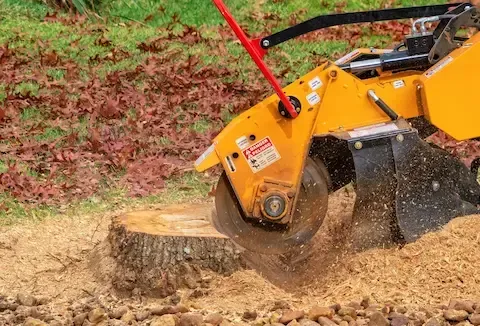
Stump grinding uses a rotating cutting wheel with carbide teeth to chip the stump into small wood fragments, typically down to six to twelve inches below grade. A trained operator guides the machine across the stump in overlapping passes until the entire crown and the upper portion of the root flare are reduced to mulch-like debris. The resulting chips can be used as garden mulch or removed from the property entirely.
In Carol Stream, most residential grinding jobs are completed in a single visit lasting anywhere from thirty minutes to a couple of hours depending on stump diameter and wood density. Hardwoods like oak and elm, which are common throughout DuPage County neighborhoods, take longer to grind than softer species. Once the job is done, the area is immediately ready for grass seed, sod, or replanting. That immediacy is one of the most significant advantages grinding has over chemical methods.
How Chemical Stump Removal Works
Chemical stump removal typically involves potassium nitrate, which is drilled into the stump through a series of holes and then allowed to work over time. The compound accelerates the natural decomposition of the wood by promoting fungal and bacterial breakdown. After several weeks to months, the softened wood can be broken up with an axe or similar tool and removed, or left to continue decomposing in place.
The timeline for chemical removal is the single most important factor to understand before committing to this method. In Carol Stream's climate, where cold winters slow biological activity significantly, a large hardwood stump treated in late fall may not be soft enough to break apart until the following summer or even later. Homeowners who apply chemicals in spring typically see meaningful softening by late summer, but full decomposition can take a year or more for stumps with substantial mass.
Cost Comparison for Carol Stream Homeowners
Chemical stump removal products are inexpensive. A container of potassium nitrate granules costs between ten and thirty dollars at most hardware stores, making the upfront cost attractive if you're working with a tight budget. However, that low sticker price doesn't tell the whole story.
You'll need a drill with long bits to create the application holes, the chemicals themselves, and potentially an axe or mattock to break up the softened wood when decomposition progresses far enough. You'll also spend several months looking at a treated stump in your yard before any of that labor pays off. If your goal is to replant the area, install a fence post, lay new sod, or build a patio, that months-long waiting period has real carrying cost in terms of delayed use of the space.
Stump Grinding by a professional crew runs higher in upfront cost, typically ranging from seventy-five to two hundred dollars or more per stump depending on size, but the job is finished in a single appointment. There are no follow-up visits, no waiting periods, and no residual stump mass rotting in your yard for the next year. For most Carol Stream homeowners who want to reclaim usable yard space quickly, the math favors grinding when the full cost of the chemical approach — time included — is factored in.
Yard Usability and Replanting Considerations
If you're planning to plant a new tree, install landscaping, lay a concrete pad, or simply restore a clean lawn surface in the treated area, grinding is the clear choice. After grinding, the ground can be filled with topsoil, amended, and seeded within days. The wood chip debris that gets worked into the soil will decompose gradually, adding organic matter over time without creating a visible obstacle.
Chemical removal leaves the stump in place while it decomposes. During that period, the area cannot be mowed cleanly, cannot be replanted directly over the stump, and may attract wood-boring insects or fungal colonies that can spread to nearby healthy trees. In Carol Stream neighborhoods where homes sit on reasonably sized lots and yards are used actively, a rotting stump in the middle of a lawn or planting bed is a genuine inconvenience for an extended period.
When Chemical Removal Might Make Sense
Chemical removal isn't without legitimate applications. If the stump is located in an out-of-the-way corner of your property — behind a shed, along a fence line, or deep in a wooded area — and you have no immediate plans for that space, the low-cost chemical option may be entirely acceptable. The timeline becomes irrelevant when the area isn't in active use.
Similarly, if access is a concern and a grinding machine cannot reach the stump without causing damage to fencing, landscaping, or underground utilities, chemical treatment may be the more practical option. Stump grinders vary in size, and an experienced Carol Stream operator can usually thread smaller equipment through tight spaces, but genuine access limitations do exist in some properties.
Local Conditions That Affect Your Decision
DuPage County's clay-heavy soil slows natural decomposition compared to sandier regions. Chemical treatments depend on the biological activity of fungi and bacteria, which thrive in moist, warm, well-aerated conditions. Carol Stream's compacted clay soil limits aeration and drainage, which means chemical removal timelines in this area often run on the longer end of the published estimates. If a product says it softens wood in four to six weeks, expect that to stretch considerably in local conditions, particularly in shaded or low-drainage areas.
For timing guidance relevant to DuPage County, reviewing spring stump grinding scheduling can help you plan a grinding appointment to align with your lawn and landscaping calendar.
Making the Right Call for Your Property
For the majority of Carol Stream homeowners who want a clean, finished result within a reasonable timeframe, stump grinding is the more practical and ultimately more cost-effective method. Chemical removal earns its place in specific low-priority or access-limited situations, but it's not a one-size-fits-all solution. Knowing what each method demands from you — in time, labor, and patience — puts you in a position to choose based on your actual yard goals rather than just the price on the label.
