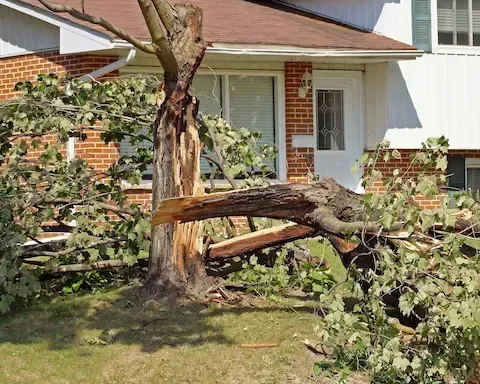
Post-Storm Tree Damage Assessment in Carol Stream IL
When severe weather strikes Carol Stream, the aftermath often leaves homeowners facing potentially dangerous tree damage that requires immediate attention. Understanding how to properly assess storm-damaged trees can mean the difference between a safe recovery and costly property damage or personal injury. The key is knowing what to look for and when to call professionals for help.
Immediate Safety Hazards to Identify
The most critical aspect of post-storm tree assessment involves identifying immediate threats to life and property. Hanging branches, also called "widow makers" by arborists, represent the most dangerous hazard following severe weather in DuPage County. These partially broken limbs can fall without warning, potentially causing serious injury or property damage.
Look for branches that are cracked but still attached, especially those hanging over walkways, driveways, or structures. Even seemingly small branches can cause significant damage when they fall from height. Power lines present another critical concern - never attempt to remove any tree material that's in contact with electrical lines, as this requires immediate attention from both utility companies and certified arborists.
Split tree crotches represent another serious hazard that often develops during storms. When the main trunk splits at a major junction, the structural integrity of the entire tree becomes compromised. These failures can happen suddenly, making Emergency Tree Removal necessary to prevent further damage.
Root System and Structural Damage Assessment
Root-plate lift occurs when strong winds literally uproot portions of a tree's foundation, creating instability that may not be immediately visible from ground level. Walk around the base of each tree on your property, looking for raised soil, exposed roots, or any indication that the tree has shifted from its original position.
Lean assessment requires careful observation of the tree's natural posture compared to its post-storm position. While many trees naturally grow with slight leans, sudden changes in angle indicate potential root damage or structural failure. A tree that previously grew straight but now leans significantly likely sustained root damage that compromises its stability.
Soil cracking around the base of trees often indicates underground root damage that isn't immediately visible. These cracks may appear several feet away from the trunk, following the pattern of major root systems that were stressed or damaged during the storm.
Evaluating Branch and Canopy Damage
Crown damage assessment involves examining the overall canopy for missing sections, broken branches, and torn bark. Significant canopy loss can affect a tree's ability to photosynthesize and may indicate the need for professional pruning or removal. Trees that have lost more than 50% of their canopy may not recover effectively.
Bark damage often appears as strips of missing bark, gouges, or areas where the protective outer layer has been compromised. While minor bark damage may heal naturally, extensive bark loss around the circumference of the trunk can be fatal to the tree.
Branch stubs and torn limbs create entry points for insects and disease. Clean cuts heal better than ragged tears, which is why professional pruning after storm damage often proves more beneficial than leaving damaged branches to heal naturally. Understanding what to do when a tree falls can help you respond appropriately to various damage scenarios.
Signs That Indicate Professional Assessment Needed
Multiple stress indicators appearing simultaneously suggest that a tree may not recover from storm damage. These include extensive bark damage combined with significant canopy loss, root exposure along with trunk splitting, or multiple large branch failures throughout the canopy.
Size and location factors play crucial roles in determining whether professional assessment is necessary. Large mature trees near structures always warrant professional evaluation following significant storm damage, even if the damage appears minor from ground level.
Species-specific vulnerabilities affect how different trees respond to storm damage. Some species, like silver maples, are prone to sudden branch failure even after storms have passed. Others, such as oaks, may appear stable but have sustained internal damage that isn't immediately visible.
Documentation and Insurance Considerations
Proper documentation of storm damage can be crucial for insurance claims and professional assessments. Take photographs from multiple angles, including close-ups of specific damage areas and wider shots showing the tree's overall condition and proximity to structures.
Time-sensitive damage may worsen rapidly after storms, making prompt assessment and action important. What appears to be minor damage immediately after a storm can develop into serious safety hazards within days or weeks as weakened wood begins to fail.
Professional consultation becomes essential when damage assessment reveals potential safety hazards, significant structural problems, or when trees are located near critical infrastructure. Carol Stream's urban forest canopy requires specialized knowledge to assess properly, particularly when dealing with mature specimens that may have hidden damage.
Recovery and Long-term Tree Health
Recovery potential varies significantly based on the type and extent of damage, the tree's species, age, and overall health before the storm. Young, healthy trees often recover from moderate damage better than older specimens or those that were already stressed before the weather event.
Proper post-storm care can significantly improve a tree's chances of recovery. This includes appropriate pruning techniques, soil care around damaged root systems, and monitoring for signs of secondary stress or disease that often follow storm damage.
The DuPage County area's climate and soil conditions affect how trees recover from storm damage, with factors like drainage, soil compaction, and seasonal timing all playing roles in successful rehabilitation of damaged trees.
