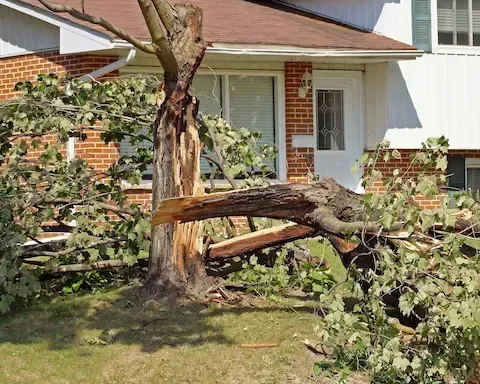
Emergency Tree Removal After Storms in Carol Stream
When severe weather strikes Carol Stream, fallen trees and damaged limbs create immediate safety hazards that require professional emergency response. Storm-damaged trees can block roadways, damage property, or pose serious risks to people and structures. Understanding when to call for emergency tree removal and what to expect from professional services helps property owners respond quickly and safely during crisis situations.
Immediate Storm Damage Assessment
After a storm passes through DuPage County, the first priority involves assessing tree damage without putting yourself at risk. Look for obvious hazards like trees leaning against structures, large branches hanging precariously, or root systems that have been compromised by saturated soil. Trees that have partially uprooted often continue shifting for hours or days after the initial storm, making them extremely dangerous.
Power lines tangled in tree debris create life-threatening situations that require immediate utility company notification before any tree work begins. Never attempt to move branches or debris that could be in contact with electrical lines, even if the power appears to be off. Professional Emergency Tree Removal crews coordinate with utility companies to ensure safe working conditions around damaged electrical infrastructure.
Document all visible damage with photographs before cleanup begins, as this documentation proves valuable for insurance claims. Focus on capturing the relationship between damaged trees and any structures they may have impacted or threatened. Insurance adjusters need clear visual evidence of storm damage to process claims efficiently.
Critical Safety Situations Requiring Immediate Response
Certain storm damage scenarios demand immediate professional intervention regardless of the time of day. Trees that have fallen across roadways create public safety hazards and legal liabilities for property owners. Most municipalities in DuPage County require prompt removal of trees blocking public right-of-ways.
Structural damage to homes or buildings from fallen trees requires emergency stabilization before weather conditions worsen. Trees resting against rooflines can cause progressive damage as wind continues to move the debris. Professional crews use specialized rigging techniques to remove tree weight from structures without causing additional harm during the extraction process.
Hanging branches, known as "widow makers" in the tree industry, pose extreme dangers to anyone walking beneath them. These partially broken branches can fall without warning, causing serious injury or death. Storm winds often weaken branch attachments that appear stable from ground level but are actually held by minimal wood fiber connections.
Root system failures create unstable trees that may topple unpredictably. Saturated soils from heavy rainfall reduce root anchoring strength, particularly in shallow-rooted species like silver maples common throughout Carol Stream. These compromised trees continue shifting position as soil conditions change, making professional assessment essential for determining removal priorities.
Emergency Response Procedures and Timeline
Professional emergency tree removal services in Carol Stream operate 24-hour response systems during severe weather events. Initial response typically occurs within 2-4 hours for life-safety situations, with crews prioritizing calls based on immediate danger levels rather than call-in sequence. Public safety hazards receive highest priority, followed by structural threats, then general property damage.
Emergency crews arrive equipped with specialized lighting systems, generators, and rigging equipment necessary for safe nighttime operations. Professional arborists assess each situation individually, determining whether immediate removal is necessary or if temporary stabilization measures can safely postpone work until daylight hours when visibility improves.
Weather conditions significantly impact response capabilities, as crews cannot operate safely during active lightning, high winds, or heavy precipitation. Emergency services resume as soon as weather conditions permit safe working environments. Tree removal during marginal weather requires additional safety protocols and may proceed more slowly than normal operations.
Communication with property owners includes realistic timeline expectations and detailed explanations of proposed removal procedures. Emergency situations often require modified approaches compared to routine tree removal, potentially involving multiple crews or specialized equipment not typically needed for standard jobs.
Insurance Considerations and Documentation
Most homeowner insurance policies cover tree removal costs when storm-damaged trees fall on structures or block driveways necessary for emergency vehicle access. However, coverage typically excludes trees that fall on lawns or landscaped areas without impacting buildings or essential access routes. Understanding policy specifics before filing claims prevents disappointment during the adjustment process.
Professional tree removal companies provide detailed documentation required for insurance claims, including photographic evidence, damage assessments, and itemized removal costs. This documentation must clearly establish the connection between storm events and tree failures to satisfy insurance company requirements for coverage approval.
Emergency tree removal costs often exceed standard removal pricing due to hazardous working conditions, after-hours labor rates, and specialized equipment requirements. Insurance adjusters understand these premium costs when storm damage creates emergency situations requiring immediate professional response.
Preventive measures like regular tree maintenance and hazard assessments may influence insurance coverage decisions. Some policies offer better coverage rates for properties with documented professional tree care programs that reduce storm damage risks through proactive management.
Common Mistakes During Emergency Situations
Property owners frequently attempt DIY removal of small branches or minor debris, not recognizing hidden dangers in storm-damaged trees. Branches under tension from awkward falling positions can spring back violently when cut, causing serious injury. Chainsaw operation around unstable debris requires professional expertise to manage safely.
Hiring unqualified contractors during emergency situations often leads to additional property damage and safety risks. Storm events attract unlicensed operators who lack proper insurance, equipment, or expertise for safe tree removal. Always verify contractor credentials and insurance coverage before authorizing emergency work.
Delaying professional assessment of marginally stable trees allows conditions to deteriorate further, potentially escalating minor problems into major hazards. Trees damaged but still standing often continue declining after storms, with failure occurring days or weeks later when property owners have moved on from the immediate crisis.
Improper cleanup of storm debris creates ongoing hazards and may violate local ordinances regarding organic waste disposal. Carol Stream and other DuPage County municipalities have specific requirements for storm debris placement and pickup that property owners must follow to avoid citations.
Local Considerations in Carol Stream
Carol Stream's mature tree canopy includes many species vulnerable to storm damage, particularly silver maples, ash trees, and older oak specimens past their prime. The community's development patterns place many large trees in close proximity to homes and infrastructure, increasing potential storm damage impacts compared to more sparsely developed areas.
Municipal ordinances in Carol Stream require permits for emergency tree removal in certain situations, though life-safety emergencies typically receive expedited approval processes. Property owners should understand local requirements before authorizing major tree removal to avoid potential violations during crisis situations.
DuPage County's geographic location experiences diverse severe weather patterns including straight-line winds, tornadoes, and ice storms that create different types of tree damage requiring varied response approaches. EAB treatment cost ranges become secondary concerns when storms damage already stressed trees requiring immediate removal for safety reasons.
Local emergency services coordinate with tree removal contractors during major storm events to prioritize public safety responses and ensure efficient resource allocation across the community. This coordination helps prevent conflicts between private contractors and municipal crews working in the same areas.
Professional Equipment and Techniques
Emergency tree removal requires specialized equipment not typically used for routine tree work, including heavy-duty cranes, rigging systems designed for unstable loads, and portable lighting systems for night operations. Professional crews maintain this equipment specifically for emergency response situations where standard approaches prove inadequate or unsafe.
Rigging techniques for storm-damaged trees differ significantly from routine removal procedures, as damaged wood may not support normal rigging loads and branch behavior becomes unpredictable. Professional arborists modify their approaches based on damage patterns, often using multiple smaller cuts rather than standard sectioning techniques.
Safety equipment requirements exceed normal tree work standards during emergency operations, with crews using additional personal protective equipment and maintaining larger safety zones around work areas. These enhanced safety measures account for increased risks present in storm-damaged tree removal scenarios.
Cleanup procedures during emergencies focus on immediate hazard elimination rather than detailed site restoration, with comprehensive cleanup typically scheduled as follow-up work once safety concerns are addressed. This phased approach allows emergency crews to respond to multiple calls efficiently during crisis periods.
Long-term Recovery and Prevention
Post-storm tree assessment extends beyond immediate emergency removal to evaluate remaining trees for hidden damage or stress factors that may cause future failures. Professional arborists recommend comprehensive property evaluations within weeks following major storm events to identify developing problems before they become emergencies.
Preventive tree care programs significantly reduce emergency removal needs by identifying and addressing potential failure points before storms strike. Regular pruning, cabling installation, and removal of declining trees creates more storm-resilient landscapes that require less emergency intervention during severe weather events.
Replacement planning for removed trees should consider species selection that better withstand local weather patterns while providing desired landscape benefits. Native species adapted to Illinois climate conditions typically demonstrate better storm resistance than exotic varieties popular in residential landscaping.
Community preparedness improves through education about tree risk factors and appropriate emergency response procedures. Property owners who understand when to seek professional help versus attempting DIY solutions contribute to overall community safety during severe weather recovery periods.
